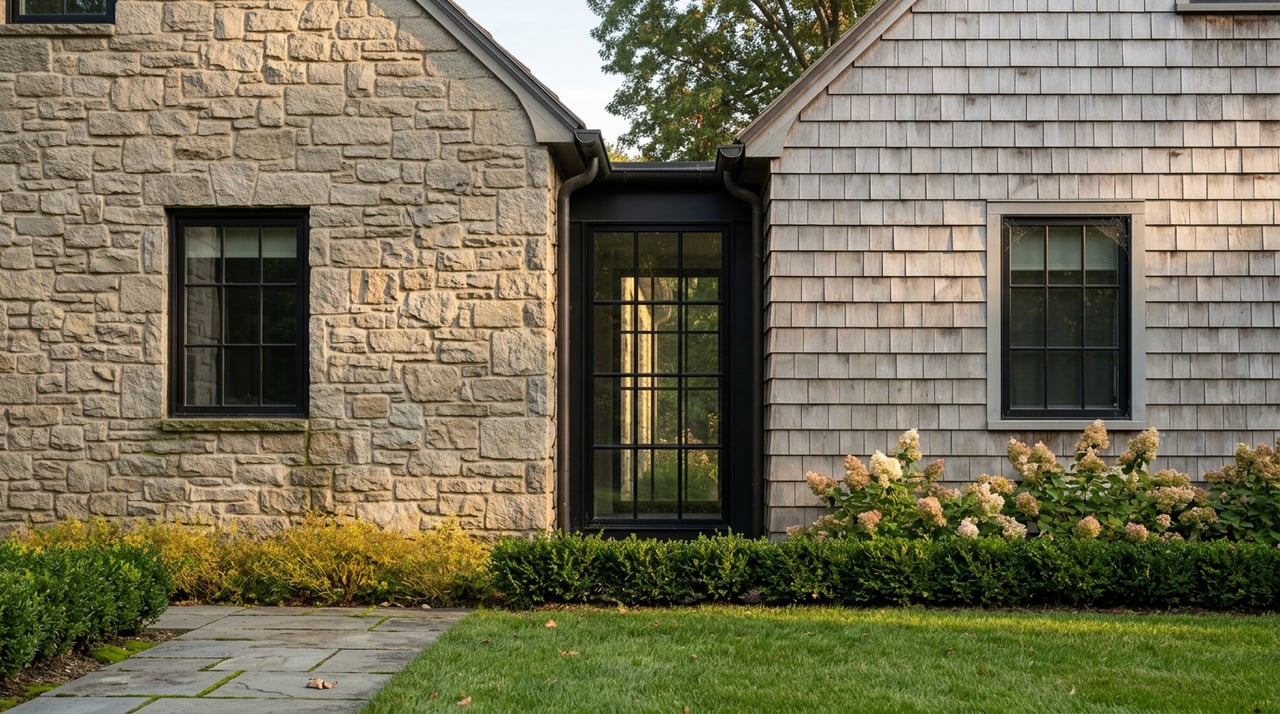
Things to Do in Chester Springs This Fall
August 27, 2026
August 27, 2026
This spring, a small crowd gathered inside The Mill at Anselma to listen to something start moving again. Miller David Rollenhagen fed wheat into a set of stones that hadn't turned since the 1880s, and the water wheel outside pushed the same wooden gears that have been in that building since 1747. Nobody was watching a demolition or a groundbreaking. They were watching something that had been sitting quiet for close to a century and a half finally wake back up.
That's the pattern worth noticing if you live here. Chester Springs doesn't tend to announce itself with new construction. Its most interesting recent moments have all involved something old getting turned back on rather than something new getting built. If you've felt like this corner of Chester County has a different rhythm than the towns around it, the mill, the tavern down the road, and the preserve off Pikeland Road are the reason why.
The Mill at Anselma, at 1730 Conestoga Road, is a National Historic Landmark and one of the only pre-Revolutionary custom grist mills in the country still running on its original 1747 power train. For decades, visitors could watch the corn side of the operation work, water wheel turning, wooden gears grinding cornmeal the way they always had. The wheat side was a different story. It had gone silent sometime in the 1880s and stayed that way for close to 140 years while the rest of the mill kept operating around it.
This year, after months of repair work on the stones themselves, that side came back online. Rollenhagen put it plainly when the mill reopened the wheat production: the mill is, as far as anyone there knows, the only one in the country still restored and operating to its exact 1747 design. Visitors this season can buy stone-ground wheat flour alongside the cornmeal, a product that hadn't existed on site since before automobiles.
The mill runs milling demonstrations on the second Saturday of every month from April through December, with guided tours offered Thursday through Sunday between 10 a.m. and 4 p.m. It's the kind of thing you can walk past for years without knowing what just changed inside.
A few miles away, on Pottstown Pike, sits Eagle Tavern, a public house that has stood at this crossroads in some form since the early 1700s and been rebuilt more than once along the way. For most of its life it operated as a tavern in the traditional sense, dim, low-ceilinged, the kind of place where local outlaws reportedly drank in the colonial era. In 2020, that changed. Chef Michael Falcone and co-partner David Backhus took over the space and reopened it as Bloom Southern Kitchen, stripping out the dark interior for a brighter, farmhouse-chic dining room wrapped in a mural of vines and poppies by local artist Ellie McIntosh.
What they kept was the building and the idea that a tavern should feed the neighborhood around it. Bloom is a scratch kitchen, meaning the biscuits, cornbread, and jams all come out of that kitchen rather than a supplier. The chicken and waffles with spicy honey have become the dish regulars order first. The cheese board draws from small Chester County producers like Birchrun Hills Farm and the Farm at Doe Run, and the lunch menu's BLT uses Benton's bacon and fried green tomatoes sourced from Broadwing and Knee High farms in Pottstown. Sunday brunch runs 10 a.m. to 8 p.m. and has become the meal people plan their weekend around.
The building's basement still holds the tunnels used during the Underground Railroad era. The dining room above them now serves hush puppies and bourbon flights. Both things are true of the same structure, at different points in its life.
Not everything in Chester Springs runs on restoration. Some of it runs on retreat. Binky Lee Preserve, off Pikeland Road, is 112 acres of former farmland that the nonprofit Natural Lands has spent years converting back into woods and meadows. More than 50,000 native trees have gone into the ground there through a process called afforestation, land that was cleared for agriculture generations ago slowly being handed back to forest.
The preserve's Red Loop Trail covers 1.6 miles with a modest 193 feet of elevation gain, an easy walk through sunny meadow and shaded woodland that takes most people under an hour. From the hilltop overlook along the Red and Yellow Trails, you can see across to Natural Lands' neighboring Bryn Coed Preserve, undeveloped fields and woodland in every direction. It's open sunrise to sunset, free, and closed Tuesdays.
What makes Binky Lee interesting alongside the mill and the tavern is the direction of the change. The mill is old machinery running again. The tavern is an old building doing new work. The preserve is farmland being deliberately un-farmed. Three different processes, all pointing at the same local habit: nothing here gets torn down and replaced. It gets repurposed, restored, or returned.
Historic Yellow Springs, on Art School Road, might be the clearest example of all. The site opened as a colonial health spa in 1722, treating visitors who came for the iron-rich mineral waters the Lenape had recognized long before European settlers arrived. During the Revolutionary War it became the only hospital commissioned and built by the Continental Congress, treating Washington's troops from Valley Forge. After that it became the Chester Springs Soldiers' Orphan School. Today it's home to Chester Springs Studio, an arts center running ceramics, painting, and sculpture classes out of buildings that have hosted at least four completely different institutions since the 1700s.
Even the barns get a second act. The village has two of note: one now home to Chester Springs Studio, and an 1845 Pennsylvania Bank Barn that today houses both the West Pikeland Township offices and the SALT Performing Arts company under one roof. Neither barn was torn down when farming stopped needing them. Both just got new tenants.
The grounds stay open daily, dawn to dusk, with self-guided walking tours available any time, and this fall the calendar includes the Historic Yellow Springs Fall Festival on Sunday, October 11, from noon to 4 p.m. Admission is free, and the afternoon includes live music, village tours, pumpkin painting, and the Yellow Springs Great Pumpkin Classic. It's a small, low-key event, the kind that doesn't need reinventing every year because the format already works.
None of these places are new. That's the point. In a lot of suburban towns, the way you know something's happening is a new sign going up where an empty lot used to be. In Chester Springs, the sign is more likely to be on a building that's been standing since before the country was founded, doing something it hasn't done in a hundred years or two hundred.
If you've lived here a while, you already knew these places existed. What might be new is realizing they're not just old buildings that happen to still be standing. They're the reason the town feels the way it does, and they're still, quietly, doing new things.
If you ever find yourself curious about a home in one of these old Chester Springs buildings, or just want to talk through what's happening in the local market, Brooke Dailey is always happy to connect.
Stay up to date on the latest real estate trends.

Brooke believes real estate should feel personal, empowering, and expertly guided. From first conversations to final negotiations, she’s committed to protecting your goals and simplifying the process.
BROOKE DAILEY | CG REALTY LLC
116 W BALTIMORE PIKE MEDIA, PA 19063